
NFC apps: tap instead of type
Access, payment, identification: we build apps that read, write and manage NFC cards, tags and wearables reliably.
NFC is quick in the lab and full of edge cases in the field: antenna position, card types, timeouts, platform limits. We have shipped NFC in payment wearables and in an e-prescription app – and we know where it gets stuck.
What NFC can do – and where the limits are
NFC only works across a few centimetres. That is precisely its strength: holding a phone against a card is an unambiguous act of intent. No pairing, no line of sight as with scanning, and no battery in the tag.
Read, write, initialise: NDEF is enough for most data exchange. Where access or value is involved we work with cards such as NTAG or MIFARE DESFire and their AES-backed authentication, rather than trusting an ID in the clear.
Android and iOS are not equally far along: both read and write tags reliably. But only Android lets an app present itself as a card via host card emulation; Apple has been opening card emulation only gradually and under conditions. We tell you early what is genuinely possible on both.
Works without a network: a tag carries its own data. Doors, machines and warehouses keep working where there is no signal – synchronisation catches up later.
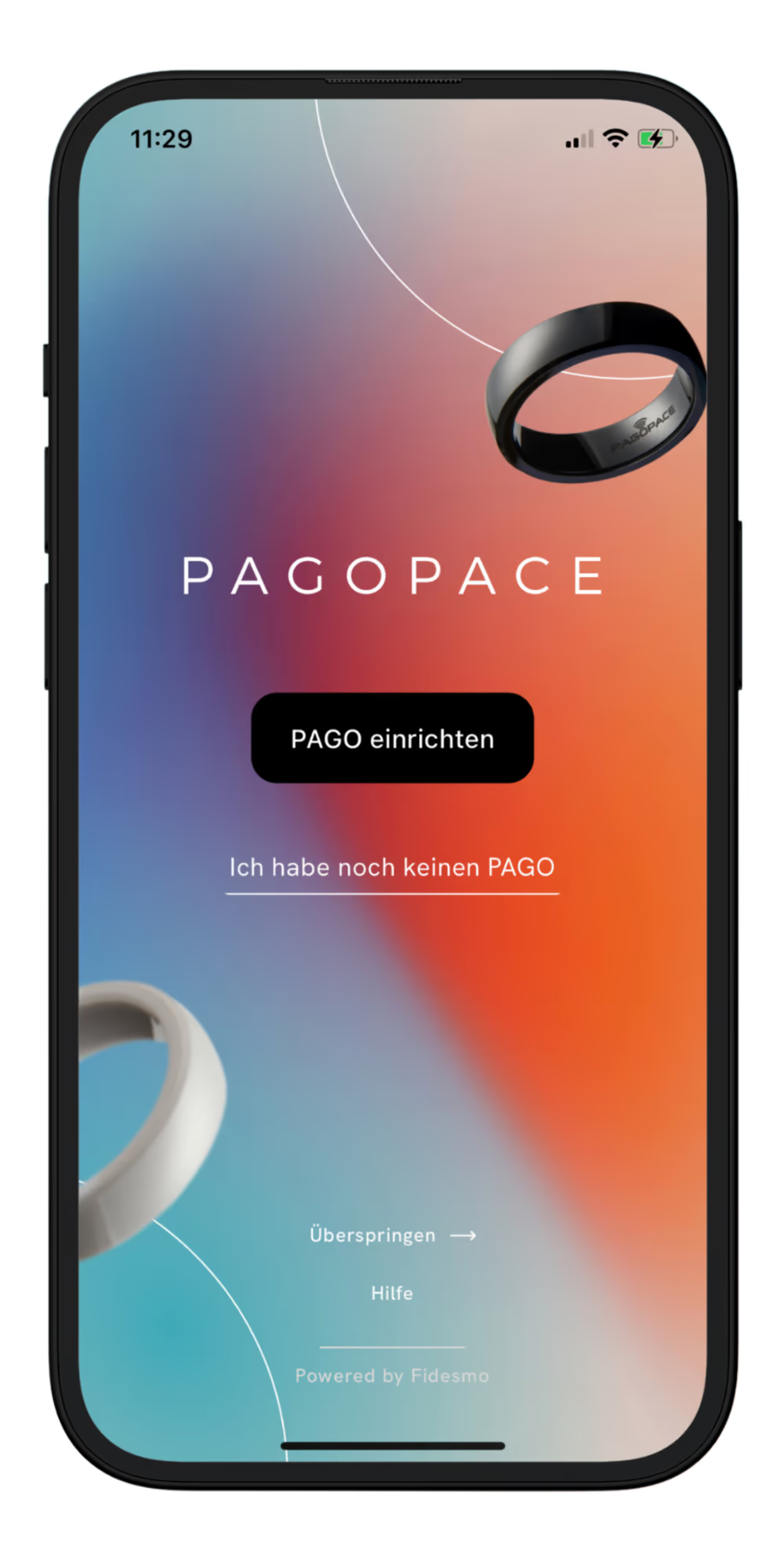
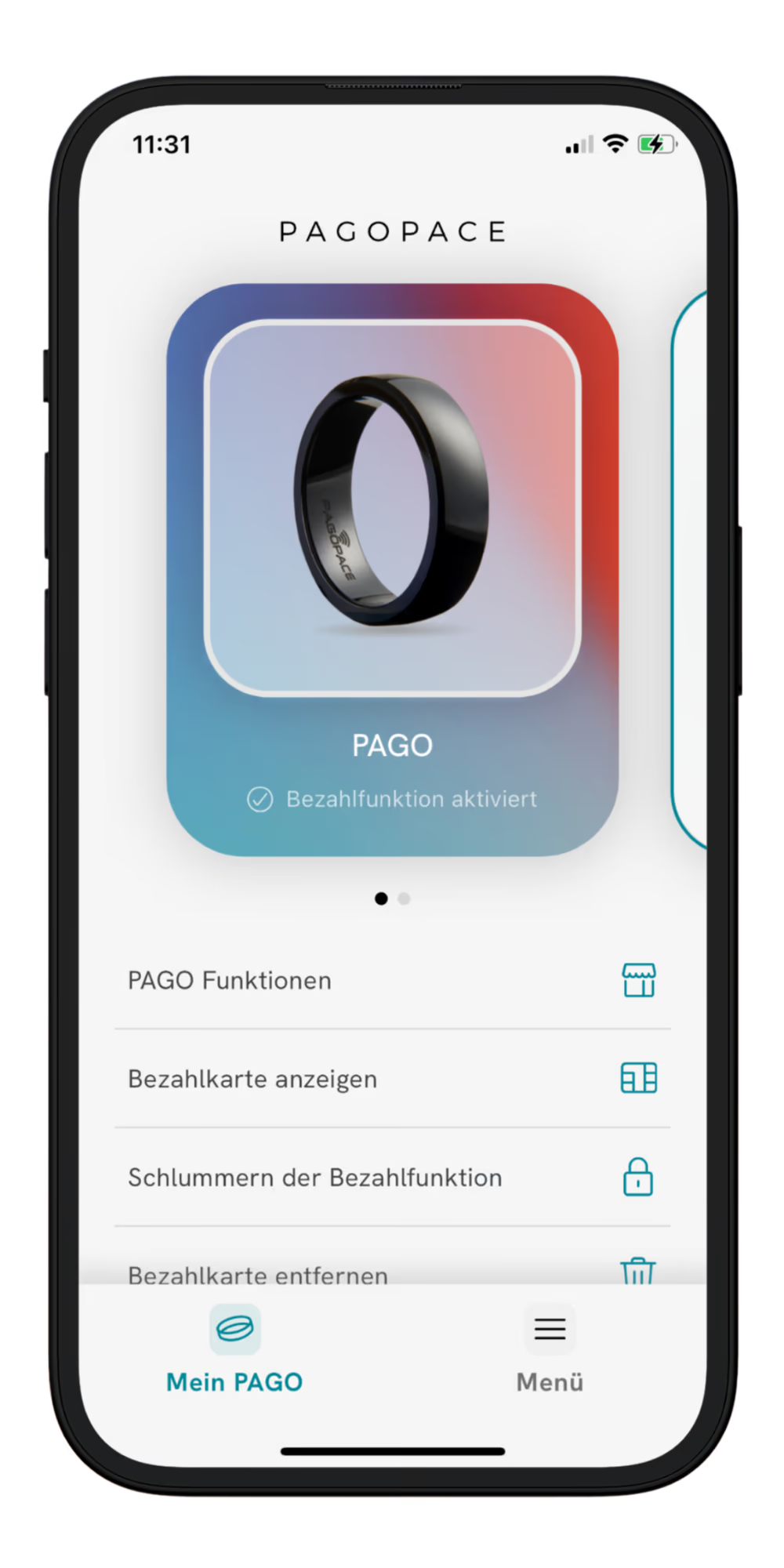
From practice: for PAGOPACE the payment function sits in a ring, for a pharmacy app we read the German electronic health card via CardLink, and through the Fidesmo SDK we put cards onto wearables.
Our NFC services
Hardware, app and backend belong together: we pick the card type and scheme, build the flow in the app, and manage the estate behind it.

Feasibility & card selection

Reading, writing & provisioning

Secure authentication

The moment of the tap

Backend & administration

SDKs & wearables
Where NFC genuinely pays off
NFC does not replace an app feature, it replaces a manual step. These four make the biggest difference:
Access & key cards
Open doors, cabinets and barriers with a card or a phone, and grant or revoke rights centrally. A lost key becomes a line in a revocation list instead of a lock replacement.
Payment & wearables
Contactless payment from a ring, wristband or fob – including activation, management and blocking inside your app. That is exactly what PAGOPACE is built on.
Identification & pairing
Tap a machine, a tool or an exhibit and see the right data immediately. Connecting a Bluetooth device turns from a search dialog into a single gesture.
Official cards & credentials
Read electronic health cards, employee badges or membership cards – where the scheme permits it, and with the compliance questions on the table from the start.
Not sure yet whether NFC holds up for your case – or whether a QR code, Bluetooth or a camera-based approach fits better?
In a free first call we assess that against your environment, hardware and users, and we will say no when NFC is the wrong route.
Frequently asked questions about NFC app development
Answers on devices, card types, security, cost and platform limits.
Which devices can read NFC?

Practically every current mid-range and flagship Android phone, and iPhones from the iPhone 7 onwards. On iOS, however, what can be read in the background differs from what requires the app to be open – we check that up front for your target devices.
Can my phone replace a card?
On Android, yes: host card emulation lets the app present itself as a card. On iOS this remains limited and conditional. If your use case depends on it, we say so before the project starts – not afterwards.
How secure is NFC?
The short range alone is not security. Security comes from the scheme: AES-backed cards, keys that do not sit in the app, revocation lists and server-side verification. Treating a bare card number as an entitlement is the most common flaw we find in existing systems.
Does NFC work without internet?
Yes. The tag carries its own data and reading it needs no network. Only the synchronisation of rights and logs runs online – we build it to survive outages and catch up afterwards.
What does an NFC app cost?
The price depends less on NFC itself than on everything around it: the card scheme, backend, rights management and the number of edge cases. So we start small with feasibility and a prototype, and only quote the rest once the number is dependable.
Can NFC be added to an existing app?
Usually yes. In Flutter apps we bind the native interfaces through our own bridges, in native apps directly. The effort rarely sits in the reading itself, but in fitting it cleanly into existing flows and permissions.
Your question is not here? Write to us – we will answer even if NFC turns out not to be the right technology.
Ask a questionSuccess stories
with measurable results
GUTEFRAGE.NET
Largest German-language question-and-answer portal
Anyone looking for an app development agency will be delighted with Johnny Bytes. We held a workshop with gutefrage.net on the topic of apps and app SDKs and had a very in-depth and detailed exchange. The knowledge and experience that Johnny Bytes brings to the table is remarkable.

Nepomuk Seiler
JUST HEALTH GMBH
Therapy management platform for leading German cancer centres
Johnny Bytes was a complete game-changer for our digital health app. Their expertise is outstanding; they got up to speed in record time and drove our development forward with decisive technical insights. We absolutely recommend them for any complex app project.

Maximilian Roederstein
EMPOWER GMBH
World-leading provider of Microsoft Office applications
In the development of our software suite, we faced complex challenges. Johnny Bytes provided more than just strategic advice; they actively supported our development process and were decisive in its successful execution.

Stephan Kuhnert
APOTHEKE LUX 99
Leading pharmacy for medical cannabis
We wanted more than just an off-the-shelf e-prescription app; we needed a solution perfectly tailored to our pharmacy's specific workflows. Johnny Bytes' expertise in digital health was clear as they understood and executed our vision in perfect detail. The result is our very own app, which is a tremendous asset for both our customers and our team. For anyone seeking a truly custom solution, you've come to the right place.

Tobias Loder
READFY
Pioneer and leader in ad-supported e-book readers
With Readfy, up to half a million users regularly read over 130,000 ebooks for free. Johnny Bytes took over the apps for iOS and Android from our previous nearshore partner and not only brought them and the backend up to date in a very short time, but also ensured that in-app sales increased by 500%.

Philipp Ortmaier
PAGOPACE
Leading provider of NFC payment rings.
We were already able to offer our customers good hardware with our payment ring. However, Johnny Bytes helped us to build the perfect complementary software to take our product to the next level. We were kept up to date at every stage of the app development and were able to make requests immediately. With the new app, we can also sell our rings in retail stores, as customers can link their rings directly to their payment card on their cell phone.

Steffen Kirilmaz
FIRST AVENUE
#1 media house in South Tyrol
Johnny Bytes has taken over the development and support of our guest information system TIPPTHEK and migrated it to a modern and sustainable architecture in a very short time. This allows us to install TIPPTHEK in thousands of South Tyrolean accommodations and provide up to 35,000 tourists a day with personalized information about their accommodation and the surrounding area.

Michael Hölzl
STAZZLE
Innovative solutions for temporary staffing and recruitment
An agile team for whom customer satisfaction is just as important as quality, the Johnny Bytes team understands communication and requirements, asks the right questions, has a sense of humor and adheres perfectly to schedules. A strong partner that we recommend without reservation. Thank you for your support!

Tasso Mitsarakis
ACADEMIC PARTNERSHIPS
Innovative projects with research institutions
Together with Johnny Bytes, FH Aachen regularly conducts practice-oriented research projects as part of the Digital Lab. Most recently, prototypes for Alexa skills and AI-supported tourism solutions were created in this context. These projects are always an enrichment for our students, the university and the company.

Prof. Dr. Mathias Eggert











NFC that works in everyday use
Access, payment or identification: discuss your use case with us. We have shipped NFC in production several times.
Your personal contact
Would you rather talk to us directly and in person? Then do not hesitate to get in touch with us.